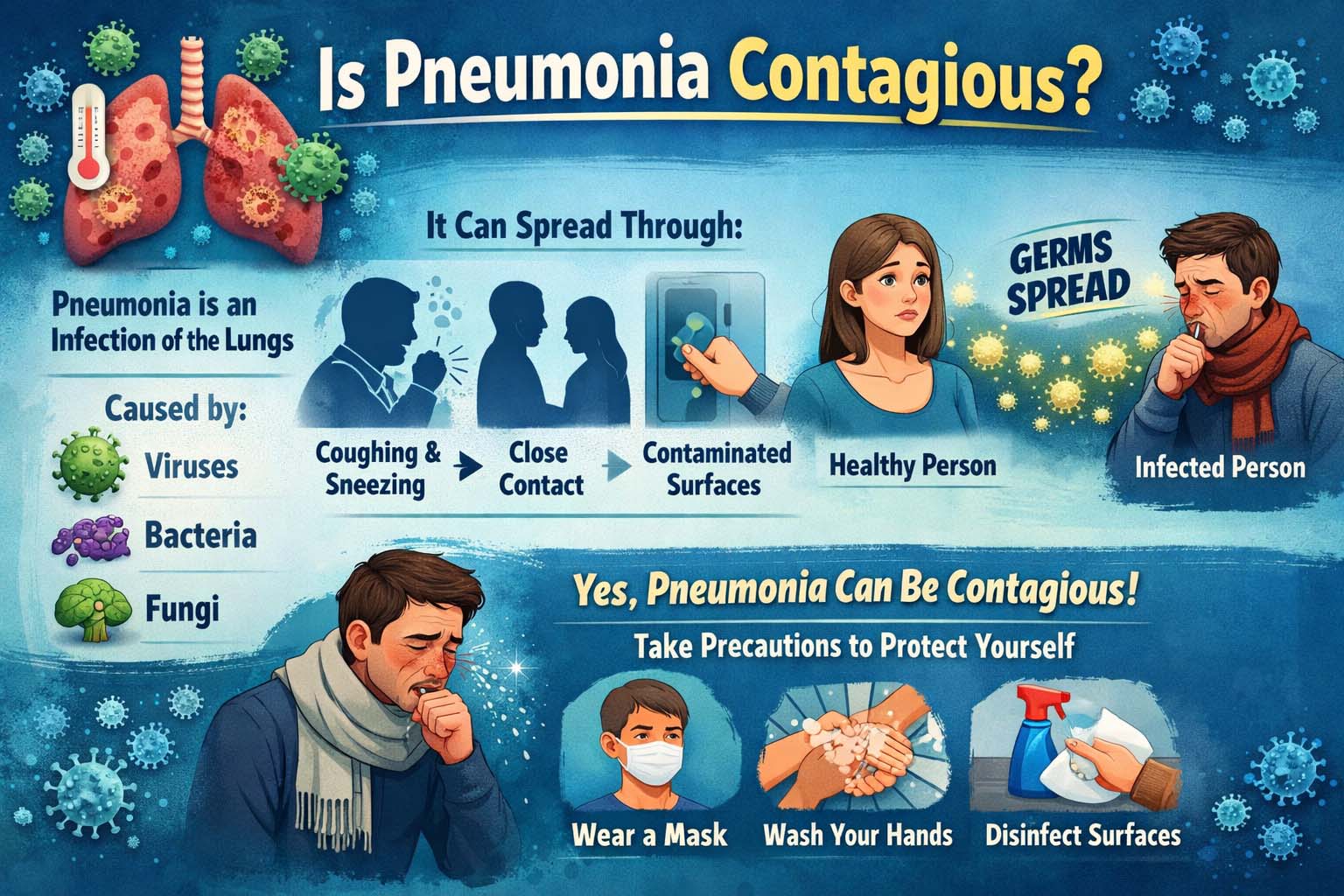
Many people ask the important question: is pneumonia contagious? Pneumonia is a serious respiratory condition that affects the lungs and can range from mild to life-threatening. Understanding whether pneumonia spreads from person to person is essential for protecting yourself, your family, and vulnerable individuals.
The answer depends on the type of pneumonia. Some forms are contagious, while others are not. Pneumonia can be caused by bacteria, viruses, fungi, or other factors, and each type behaves differently.
In this complete guide, we explain whether pneumonia is contagious, how it spreads, symptoms to watch for, prevention strategies, and when to seek medical care.
What Is Pneumonia?
Pneumonia is an infection or inflammation of the lungs, specifically the air sacs called alveoli. These air sacs may fill with fluid or pus, making breathing difficult and reducing oxygen flow.
Common symptoms include:
- Cough
- Fever
- Chills
- Shortness of breath
- Chest pain
- Fatigue
- Rapid breathing
Pneumonia can affect one lung or both lungs and can occur in people of all ages.
Is Pneumonia Contagious?
The question is pneumonia contagious does not have a single yes-or-no answer. It depends on the cause.
Contagious Types of Pneumonia
These forms may spread from person to person:
- Viral pneumonia
- Bacterial pneumonia
- Mycoplasma pneumonia (walking pneumonia)
The germs that cause these infections can spread through coughing, sneezing, saliva droplets, or close contact.
Non-Contagious Types of Pneumonia
Some types are not spread between people, such as:
- Fungal pneumonia from environmental exposure
- Pneumonia linked to weakened immunity or chemical irritation
So, when asking is pneumonia contagious, it is important to know what type of pneumonia is involved.
How Contagious Pneumonia Spreads
When contagious germs are involved, transmission may happen through:
1. Respiratory Droplets
Coughing and sneezing release droplets containing bacteria or viruses.
2. Close Contact
Living in the same home or caring for a sick person can increase risk.
3. Shared Surfaces
Touching contaminated surfaces and then touching your face may spread some infections.
4. Crowded Spaces
Schools, hospitals, nursing homes, and public transport may increase exposure risk.
Who Is Most at Risk?
Some people are more likely to develop pneumonia or severe illness:
- Older adults (65+)
- Babies and young children
- Smokers
- People with asthma or COPD
- People with diabetes
- Individuals with weak immune systems
- Hospitalized patients
These groups should take extra precautions if exposed.
How Long Is Pneumonia Contagious?
How long someone remains contagious depends on the cause and treatment.
Bacterial Pneumonia
Many people become less contagious after 24–48 hours of antibiotics, but medical advice varies.
Viral Pneumonia
A person may remain contagious while symptoms continue, especially fever, coughing, or active infection.
Walking Pneumonia
This can spread slowly and sometimes before symptoms are obvious.
Because timing varies, follow a healthcare professional’s advice.
Symptoms of Pneumonia
Symptoms may appear suddenly or gradually.
Common Signs
- Persistent cough
- Fever or chills
- Chest pain when breathing
- Difficulty breathing
- Fatigue
- Sweating
- Mucus production
In Older Adults
Confusion, weakness, or low body temperature may occur instead of fever.
In Children
Fast breathing, poor feeding, irritability, or wheezing may appear.
How to Prevent Contagious Pneumonia
If you’re wondering is pneumonia contagious, prevention is key.
1. Wash Hands Often
Use soap and water for at least 20 seconds.
2. Cover Coughs and Sneezes
Use tissues or your elbow.
3. Avoid Close Contact
Stay away from people who are actively sick when possible.
4. Get Vaccinated
Vaccines can reduce risk of certain pneumonia causes, including:
- Influenza vaccine
- Pneumococcal vaccines
- COVID-19 vaccines (where relevant)
5. Stop Smoking
Smoking damages lung defenses and increases pneumonia risk.
6. Stay Healthy
Sleep, nutrition, hydration, and exercise support immune function.
How Pneumonia Is Diagnosed
Doctors may use:
- Physical exam
- Listening to lungs with a stethoscope
- Chest X-ray
- Blood tests
- Pulse oximeter (oxygen level)
- Sputum sample in some cases
Early diagnosis improves treatment outcomes.
Treatment Options
Treatment depends on the cause.
Bacterial Pneumonia
Often treated with antibiotics.
Viral Pneumonia
May improve with rest, fluids, symptom care, and sometimes antiviral medication.
Supportive Care
- Fever reducers
- Hydration
- Rest
- Oxygen therapy in severe cases
Never self-prescribe antibiotics without medical guidance.
When to Seek Medical Attention
Seek urgent care if you have:
- Trouble breathing
- Blue lips or fingertips
- Chest pain
- High fever that won’t improve
- Confusion
- Severe weakness
- Worsening symptoms after initial improvement
Children, seniors, and immunocompromised people should seek care early.
Can You Catch Pneumonia from Someone Else?
You may catch the germs that cause pneumonia, but not everyone exposed develops pneumonia. Some people may only get a cold or mild infection, while others develop lung infection depending on age, immunity, and health status.
So the better question is not only is pneumonia contagious, but also whether the specific germ can spread and whether the exposed person is vulnerable.
Pneumonia vs Cold vs Flu
Cold
Usually mild, mostly upper respiratory symptoms.
Flu
Often fever, body aches, fatigue, cough.
Pneumonia
May involve deeper lung infection, chest pain, breathing trouble, and more serious illness.
Sometimes flu can lead to pneumonia as a complication.
Recovery Time
Recovery depends on age, health, and severity.
- Mild cases: 1–3 weeks
- Moderate cases: several weeks
- Severe cases: longer recovery
Fatigue can last even after infection improves.
Common Myths
Myth: All pneumonia is contagious
False. Some forms are not spread person-to-person.
Myth: Only older adults get pneumonia
False. Anyone can develop pneumonia.
Myth: Antibiotics treat every pneumonia
False. Viral pneumonia does not respond to antibiotics.
Conclusion
So, is pneumonia contagious? Sometimes yes, sometimes no. Pneumonia caused by bacteria, viruses, or walking pneumonia may spread through respiratory droplets and close contact. Other forms, such as aspiration or some fungal pneumonias, are generally not contagious.
The best protection includes good hygiene, vaccination, avoiding smoking, and seeking medical attention when symptoms become serious. If you suspect pneumonia, especially with breathing difficulty or high fever, consult a healthcare professional promptly.